


It only takes one moment. The room is full, the music is good, the night is going exactly the way you planned it, and then two guests near the bar start squaring up over something that, an hour from now, neither of them will remember starting. What happens in the next ninety seconds determines whether that’s a story your guests tell about a great night out, or the reason your venue ends up in front of the licensing committee.
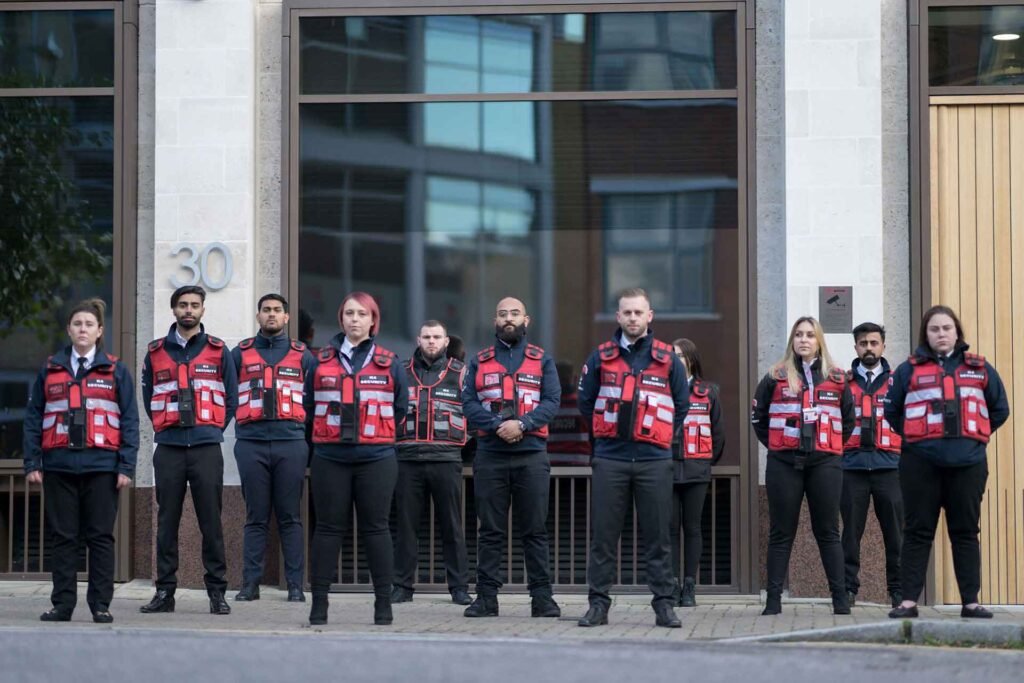
That gap between those two outcomes is, more often than not, filled by an SIA door supervisor. Not the stereotype arms folded, scanning for trouble like it’s a personality trait, but a licensed professional trained specifically to read a room, intervene early and document everything properly afterwards. The SIA-licensed door supervisor of 2026 carries first aid certification, counter-terrorism awareness and conflict de-escalation training that didn’t exist in the role a decade ago. Understanding what that licence represents changes how you should think about hiring one.
What an SIA Door Supervisor Licence Covers
An SIA door supervisor is licensed by the Security Industry Authority to work in venues providing regulated entertainment or alcohol, such as nightclubs, bars, music venues, festivals and ticketed spaces of almost any kind. To hold that licence, someone has completed approved training, passed identity and criminal record checks and met defined competency standards for public-facing security work.
There’s a distinction worth knowing before you start hiring: a Door Supervisor licence covers general security guarding duties as well, including some functions tied to CCTV monitoring services, like identifying trespassers or protecting property. By contrast, SIA-licensed security guards cannot work the other way round, as the licence doesn’t authorise someone to perform door supervision. If a candidate or provider tells you the two are interchangeable, that’s worth double-checking before they’re anywhere near your entrance. Licences run for three years before renewal is required.
Protecting Your Licence: Why This Isn’t Optional
The legal baseline
If your venue operates under a premises licence, meaning you sell alcohol or provide regulated entertainment, and you’re using security at the door or inside the venue, the law requires those staff to hold a valid SIA licence. Working as a door supervisor without one is a criminal offence in England and Wales, not a regulatory technicality.
What does it cost you if you get this wrong?
The consequences of using unlicensed staff stack up quickly: licence reviews that can end in revocation, enforcement action from your local authority, voided insurance cover (many policies are written specifically around licensed security being in place), closure notices and reputational damage that outlasts any single bad night. There’s also a personal dimension, where venue managers and event organisers can carry individual legal exposure here, not just the business.
Doing your own due diligence
It’s worth running a quick check yourself rather than taking a provider’s word for it. Confirm each door supervisor’s SIA licence is active, covers the door supervision category specifically and isn’t suspended or expired. The SIA’s online licence checker makes this a two-minute job. Keep a simple record of which licensed staff worked which event; if a question ever comes up later, that record is the difference between a quick answer and a drawn-out one.
Guest and Staff Safety: Where the Real Value Sits
Presence that prevents problems before they start
There’s a reasonably well-documented effect in crowd psychology where visible, calm authority changes group behaviour before anyone consciously decides to behave differently. A trained, visibly present door team tends to reduce anti-social behaviour, theft and unauthorised access simply by being there, not through confrontation, but through the same logic as a lifeguard’s chair at a pool. Nobody’s thinking about the lifeguard until they need one, but everyone behaves slightly differently because the chair is occupied.
Crowd flow is a safety system, not just a queue.
Door supervisors manage entry pacing, capacity limits and the physical flow of people in and out, and this matters more than it sounds like it should. Poorly managed ingress and egress is a recurring factor in crowd-related incidents at UK venues, which is part of why proper queue and capacity management isn’t treated as a customer service nicety but as a core safety function.
De-escalation is a trained skill, not a personality trait.
Good door supervisors are trained in specific conflict resolution techniques aimed at catching disagreements early, before they become incidents and at carrying out a lawful, safe ejection on the rare occasions that’s the only option left. One thing worth knowing: in most cases, the presence and tone of a trained supervisor defuse a situation well before any physical intervention is needed. The skill is almost entirely in the first thirty seconds of how someone approaches a tense moment, not in what happens if it goes further.
A safeguarding role that’s grown well beyond “security”
Increasingly, door supervisors are doing safeguarding work that has little to do with conflict at all, keeping an eye on lone or vulnerable guests, recognising signs of exploitation and responding to welfare concerns around intoxication. Alcohol-related impairment raises the risk of poor judgment, aggression and accidents and spotting that risk early, before someone is in genuine danger, has become a core part of the modern role rather than an occasional extra.
First aid is now a baseline qualification, not an add-on.
Since April 2025, the SIA has required door supervisors to hold an up-to-date Emergency First Aid at Work qualification (or recognised equivalent) before they can even take the refresher training needed to renew their licence. In practice, that means every licensed door supervisor working your event is also a certified first responder, someone who can act on a medical emergency in the minutes before professional help arrives, which is often the window that matters most.
Customer Experience: The Part People Forget to Mention
First impressions are made at the door, not the bar
For most guests, a door supervisor is the first person they interact with at your event. Their tone, manner and how they handle something as routine as an ID check sets an emotional baseline for everything that follows, and that’s true whether the interaction takes four seconds or four minutes.
Authority and approachability aren’t opposites.
The best door staff manage to be firm without being cold, checking ID fairly, explaining a “no” clearly when one’s needed and treating guests like people rather than potential problems. We’ve worked with venues in the past that hired purely on physical presence and learned the hard way that intimidating doesn’t mean effective; a supervisor who makes guests tense before they’ve even got through the door tends to create more problems over the course of a night than they prevent.
Helpful, not just watchful
Door supervisors are often asked for directions, timing information, or general questions about the event and answering those well, rather than treating them as an interruption, does more for guest experience than most venues budget time to notice.
Your reputation rides on this more than you’d think
Word of mouth about how a venue’s security “felt” spreads fast and not always fairly. Professional, properly trained door staff protect your reputation in two directions at once: they keep serious incidents from happening, and they make sure smaller interactions don’t leave guests with a bad taste that has nothing to do with the music or the menu.
Risk Management: The Unglamorous Part That Matters
Spotting problems before they become incidents
Trained door supervisors run routine checks throughout an event, including capacity, exits, crowd density and behaviour patterns that catch small issues while they’re still small. This is less about reacting well and more about noticing early, which is a harder skill to teach but a far more valuable one.
Documentation that holds up
Proper incident response includes clear liaison with management and, where relevant, emergency services, along with standardised written reporting. That paperwork matters more than it seems like it should at the time. If an insurance dispute or legal claim follows an incident months later, the quality of that contemporaneous record is often what determines the outcome.
Searches, but only done properly
SIA-licensed door supervisors can conduct bag searches for prohibited items, but only with the individual’s consent, which means your venue needs clear, visible “conditions of entry” signage explaining this before anyone reaches the door. Skipping that step doesn’t just create friction; it removes the legal basis for the search itself.
Reducing your liability, not just your risk
Hiring properly licensed, trained staff measurably reduces exposure to claims of discrimination or excessive force, partly because SIA training specifically covers the legal boundaries around search, restraint and ejection. Untrained staff making those calls on instinct is where most liability claims against venues originate.
Martyn’s Law: What’s Coming and Why It’s Worth Acting Early
The Terrorism (Protection of Premises) Act 2025, known as Martyn’s Law, named in memory of Martyn Hett, one of the 22 people killed in the 2017 Manchester Arena attack, received Royal Assent in April 2025. It introduces a tiered statutory duty: a “standard tier” for premises and events expecting 200 to 799 people and an “enhanced tier” for 800 or more, each requiring proportionate counter-terrorism preparedness.
Here’s the detail worth getting right: the Act isn’t in force yet. Government guidance sets an implementation period of at least 24 months from Royal Assent before the duties become enforceable, with the SIA taking on the regulator role once that happens. That means there’s currently no legal requirement to comply, but there’s also no reason to wait until the deadline is close before preparing, given how much groundwork is involved in getting a venue’s security planning, staff training and emergency drills ready rather than just paper-compliant.
Forward-thinking door supervision providers are already building Martyn’s Law awareness into their training now, ahead of the requirement, covering hostile reconnaissance recognition, lockdown protocols and how to report suspicious behaviour or items through the correct channels. Choosing a provider who’s already building this in puts you ahead of a deadline rather than scrambling to meet one.
Versatility: One Licence, Almost Any Event
The same SIA qualification underpins event security staffing across a surprisingly wide range of settings, each with its own demands. Nightclubs and bars lean on crowd management, ID verification and late-night incident handling. Festivals and concerts need perimeter control and entry management across multiple access points, often including dedicated front-of-stage and pit operations. Sporting events at stadiums and racecourses require spectator management at a different scale entirely. Corporate events and private functions ask for something almost opposite, a visible-but-unobtrusive presence that balances access control against guest comfort, where heavy-handed security would actively work against the event’s tone. And because door supervisors can legally operate at both licensed and unlicensed premises, that one qualification covers virtually any event type you’re likely to run.
The Cost-Benefit Case, Stated Plainly
What a single incident costs
One serious incident, a fight that escalates, an unchecked overcrowding issue, an ejection handled badly, can generate legal fees, compensation claims, licence review costs, lost future bookings and higher insurance premiums, often well beyond what proper door supervision would have cost across an entire season of events. Viewed this way, professional security isn’t really a cost centre; it’s closer to insurance that also happens to improve the guest experience while it’s not being needed.
Freeing up your own team
When door supervisors handle access control and incident response, your event staff get to focus on the things they’re there for: service, hospitality and running the event itself, instead of being pulled into situations they’re neither trained nor paid to manage.
A quieter financial benefit: insurance
Many insurers treat SIA-licensed security as a recognised risk-reduction measure, which can translate into lower premiums on liability and event cancellation cover. It’s worth asking your insurer directly whether licensed door supervision affects your specific policy terms, since this varies by provider.
Protecting the licence that lets you operate at all
For any venue holding a premises licence, professional door supervision is one of the more direct ways to demonstrate compliance with licensing conditions and avoiding enforcement action here protects far more than the cost of a single event.
What Changed in 2025 and Why It Matters Now
From 1 April 2025, SIA refresher training requirements became mandatory for door supervisors and security guards renewing their SIA licence, a requirement that applies across the board, not just to new entrants. Anyone hired through a reputable provider today is working to current standards, not whatever they learned when they first qualified, possibly years earlier.
Practically, that means the supervisors you hire have current knowledge of legal requirements, updated procedures and the latest best practice in the field and crucially, every one of them holds that Emergency First Aid at Work qualification as a precondition of taking the refresher course at all. You’re not just hiring security. You’re hiring a trained first responder who happens to also handles access control.
Choosing a Door Supervision Provider: What to Ask
A few direct questions tend to separate a professional provider from one coasting on a logo and a uniform. Ask whether every officer is SIA-licensed and vetted, whether ongoing training refresher courses, first aid and Martyn’s Law preparation are built into how they operate rather than left to individual staff and what their staff turnover looks like, since lower turnover signals better-trained, more experienced teams who know each other and work as a unit. Ask for case studies or references from events similar to yours, what their incident reporting and emergency protocol looks like in practice and whether they can scale staffing up or down based on a proper risk assessment rather than a flat day-rate headcount.
Local expertise carries more weight than it might seem on paper. A provider based near your venue tends to offer faster response if you need extra staff at short notice, genuine familiarity with local transport patterns and known trouble spots and often underrated existing working relationships with local licensing authorities that can smooth over questions before they become problems.
Before Your Next Event
A short list worth running through before you book anything:
- Conduct a proper risk assessment for the event rather than estimating staffing from past events alone
- Confirm how many door supervisors the assessment points to
- Choose an SIA-approved provider and verify, yourself, that every supervisor’s licence is active and covers door supervision specifically.
- Check that first aid qualifications are current.
- Make sure your team has been briefed on what’s coming with Martyn’s Law, even if it isn’t yet enforceable.
- Put up clear conditions-of-entry signage covering bag searches
- Set up a direct communication line between your event management and the security team on the night
- Build in pre-event and post-event safety checks as standard practice
- Keep a simple written record of all security arrangements, it costs you nothing on the night and matters considerably if a question ever comes up afterwards
None of this is complicated, but it does reward the organisers who treat it as part of event planning rather than an afterthought handled the week before doors open. Get the right people on your door, properly licensed and briefed, and the security side of your event becomes something your guests never have reason to think about, which, in this line of work, is exactly the point.
If you’re planning staffing levels for an upcoming event, our guide to conducting a security risk assessment for events walks through that process in more detail, and our overview of SIA licence types and what each one covers is worth a read if you’re weighing up door supervision against other security roles for your venue.
FAQs
Is hiring SIA door supervisors a legal requirement for my event?
If your event runs on licensed premises, meaning alcohol is sold or regulated entertainment is provided, and you’re using security at the entrance or inside the venue, yes. Working as a door supervisor without an SIA licence is a criminal offence in England and Wales.
What’s the difference between a door supervisor and a security guard?
A Door Supervisor licence covers general security guarding work as well as door supervision. A Security Guard licence does not extend to door supervision duties; the two aren’t interchangeable, despite sometimes being treated that way informally.
Do door supervisors need first aid training?
Yes. Since April 2025, an up-to-date Emergency First Aid at Work qualification (or recognised equivalent) has been required before a door supervisor can even take the refresher training needed to renew their licence.
Does Martyn’s Law apply to my event right now?
Not yet. The Act received Royal Assent in April 2025 with at least a 24-month implementation period before its duties become enforceable, so there’s currently no legal requirement to comply. Preparing ahead of that deadline, particularly for venues expecting 200 or more attendees, puts you in a stronger position once it does land.
Can door supervisors search guests’ bags?
Yes, provided the individual consents to the search. Clear “conditions of entry” signage at your venue, explaining that bag searches may occur, is an essential part of making that consent meaningful and legally sound.
How many door supervisors does my event need?
There’s no single national formula; it depends on venue size, expected attendance and a proper risk assessment specific to your event. A reputable provider should walk through that assessment with you rather than quoting a headcount off the top of their head.
Can I hire door supervisors for a single one-off event?
Yes. Flexible, short-term cover for one-off events, festivals and special occasions is standard practice across the industry, not a special arrangement.
Professional Facilities Management
Security, compliance, maintenance, and support all delivered with professionalism and accountability by the team you can rely on.
Speak to Our Team