


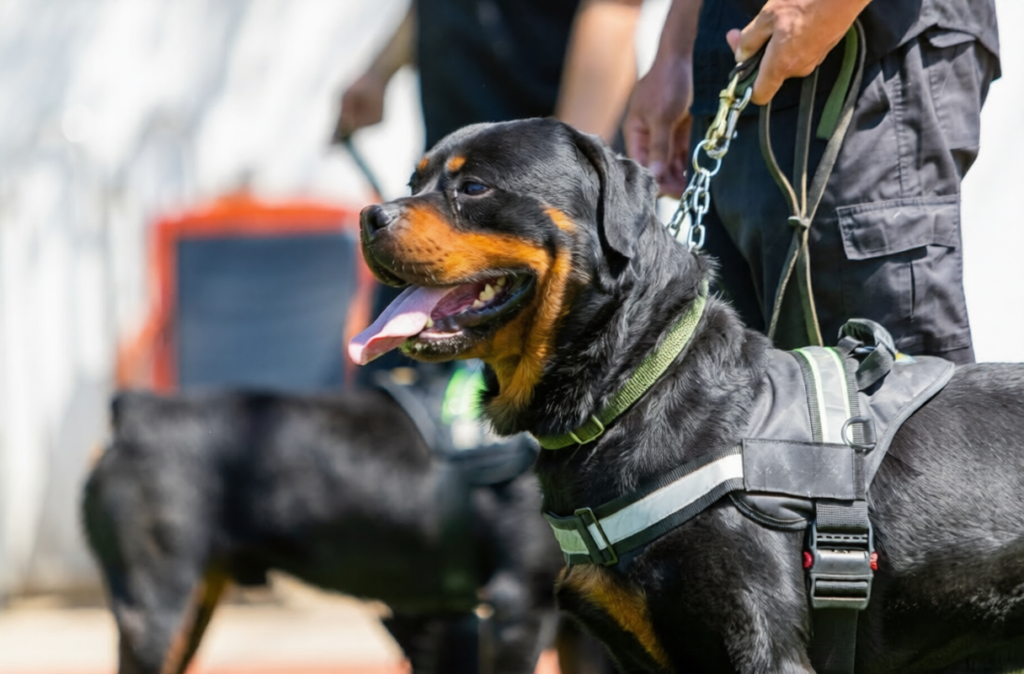
Canine partners are a growing presence throughout the UK. K9 teams are becoming a popular choice for construction companies, warehouse operators, event organisers, property managers, and corporate facilities to keep people, assets and premises safe. Once a specialist service is now a mainstream one.
It is not just fashion that’s facilitating this growth. With security concerns, the lack of labour in the shipping industry, high operating costs, and the successful use of trained dogs, demand has increased significantly. In 2026, K9 security services have become one of the fastest-growing areas of the private security sector.
As a business owner, site manager, or large facility owner, knowing why this is the case can help better inform your security decisions.
Why Demand for K9 Security Services Is Rising
Security requirements have changed. With larger sites, more opportunity for theft, higher asset values, and a greater demand for asset operating cost control, many businesses are now vulnerable. Despite all the high-tech advances in guarding, there remains considerable value in the traditional approach, but many organisations have begun their search for something that will yield a more effective deterrent and provide greater coverage.
This is causing the demand for K9 security services to increase.
The global protection dog market is estimated to reach $2.5 billion by 2033 and is expected to be valued at $1.2 billion in 2024, according to the market researchers of Verified Market Reports. There are other industry reports indicating that the industry will keep growing over the next decade, but the security dog industry will be a major part of that growth.
The increase is especially evident in the UK, as dog teams are becoming a vital part of the security on worksites, logistics centres, commercial developments and public events.
Rising Crime Concerns Are Changing Security Decisions
Business owners don’t tend to invest in security because they like to; they invest in security because they have to. They invest because it is a necessity. The rise in concern about theft, trespass, vandalism and anti-social behaviour has impacted the evaluation of risk for many organisations.
Theft of equipment and fuel remains an issue on construction sites. Organised crime is an issue in warehousing. Crowd management is key during events, and must be visible. Commercials are frequently left vacant at night.
A security dog alters the equation for would-be invaders. Cameras catch the incident after it occurs, whereas trained dogs can sometimes prevent the incident from even happening!
The Senses That Technology Cannot Replicate
The technology for security these days is amazing. CCTV systems offer high-resolution video. Movement is tracked by motion sensors. Access Control Systems limit access. However, dogs still have some skills that humans can’t compete with. The National Institutes of Health reported that dogs have a sense of smell that is thousands of times more acute than a human’s, while other veterinary research has demonstrated that dogs can sniff out explosives. Some breeds are able to smell much lower concentrations of scents than humans can.
This allows trained dogs to locate:
- Hidden intruders
- Explosives
- Drugs
- Firearms and ammunition
- Concealed individuals
- Unauthorised persons in large areas
Their hearing also provides an additional advantage. Dogs can detect movement, footsteps, or unusual sounds long before they become obvious to human officers.
Think of a K9 team as an early warning system with four legs. The dog gathers information constantly, while the handler interprets and acts upon it.
The Power of Visible Deterrence
One misunderstanding about canine security is that the dog’s primary role is physical intervention. In reality, deterrence is often far more valuable.
A security camera records a crime.
A trained security dog frequently stops it from happening.
The sound of barking, the sight of a patrol dog, and the presence of a trained handler create a strong psychological barrier. Criminals often choose easier targets rather than confronting a K9 team.
Security functions much like street lighting. The purpose is not only to help people see; it is to discourage wrongdoing before it begins. Dogs operate in much the same way.
One K9 Team Can Cover Large Areas Efficiently
Large sites present a challenge. A warehouse, distribution centre, industrial facility, or construction project may require several officers to patrol effectively. Costs rise quickly when multiple shifts are necessary.
A trained dog and handler can patrol extensive areas more efficiently than static guarding alone. This does not mean dogs replace security officers. Instead, they multiply the effectiveness of existing teams.
The handler provides judgment, communication, and decision-making. The dog provides detection, deterrence, and environmental awareness. Together, they function like two sets of eyes, two sets of ears, and one shared objective.
A Real-World Example From Site Security
Several years ago, we worked alongside a security team responsible for protecting a large industrial site that had experienced repeated trespassing. The site already had fencing, lighting, and cameras. Yet incidents continued.
During overnight patrols, a trained dog repeatedly alerted the handler to movement near an isolated storage area. The individuals involved left the site before any confrontation occurred.
Nothing dramatic happened. No arrests were made. No physical intervention took place. But the attempted intrusion stopped.
That experience reinforced something we had once overlooked ourselves. Technology can monitor a site, but it does not always change behaviour. The visible presence of a trained K9 team often does.
Industries Adopting K9 Security Services
Construction Sites
Construction sites remain one of the fastest-growing sectors for canine security. Expensive machinery, fuel, copper, and tools attract thieves, particularly during evenings and weekends.
Dogs provide:
- Strong deterrence
- Rapid site coverage
- Detection of hidden intruders
- Flexible patrols
Warehouses and Logistics Facilities
Large buildings with multiple access points benefit significantly from K9 patrols. Dogs can quickly search extensive spaces while helping reduce theft and unauthorised access.
Events and Festivals
Large crowds require visible security measures. K9 teams assist with:
- Crowd reassurance
- Area searches
- Detection work
- Rapid response
Corporate and Commercial Properties
Business parks, offices, and industrial estates increasingly use canine teams during out-of-hours periods.
Healthcare Facilities
Some hospitals have introduced specialist security dogs to support staff safety and reduce aggressive incidents.
Residential Estates and Private Protection
High-net-worth individuals and private estates have contributed to increased demand, although commercial applications continue to dominate the market.
Celebrity Influence Has Increased Public Awareness
Protection dogs once carried an image associated only with celebrities, wealthy individuals, or specialist security operations. That perception has changed.
High-profile figures, athletes, and television personalities have publicly discussed owning protection dogs, increasing awareness among the wider public.
While celebrity ownership does not explain the industry’s growth by itself, it has normalised the concept of professionally trained dogs acting as both companions and protective assets. The result is greater public acceptance of canine security services.
Legal Requirements for Security Dogs in the UK
The growth of the industry has also increased attention on standards and regulations. The Guard Dogs Act 1975 requires that guard dogs protecting premises remain under the control of a handler. Warning signs must also be displayed.
Professional handlers working within the private security industry generally require appropriate SIA licensing. Industry standards such as BS 8517 guide the use of security dogs, while organisations such as NASDU promote training and welfare standards.
These regulations matter. A properly trained dog and qualified handler deliver very different outcomes compared with unregulated or poorly managed operations.
The Future of K9 Security Services
The growth seen in 2026 does not appear temporary. Several factors continue to support expansion:
- Increasing security concerns
- Rising labour costs
- Larger commercial sites
- Improved professional standards
- Advances in handler training
- Greater integration with technology
Today’s K9 teams are equipped with GPS tracking, communication systems, body-worn cameras and real-time reporting. However, technology is being used to make the role of the dog better, not better.
When it comes to the role of artificial intelligence, surveillance technology and automation in an organisation, organisations are still investing in canine teams, as they still offer one thing that can’t be replicated: instinct.
K9 Security Is No Longer a Specialist Service
The most common misconception about security dogs is that they’re only for high-risk situations. This is no longer the case. K9 teams are becoming a vital service on construction sites, in warehouses, at events, business parks, industry sites and commercial premises. These are useful services.
- You gain stronger deterrence.
- You improve site coverage.
- You add capabilities that cameras and sensors cannot offer.
Most importantly, you create a visible security presence that changes behaviour before problems develop. As the private security sector evolves, K9 services have moved from specialist support to mainstream protection.
For many organisations in 2026, the question is no longer whether canine security works. It is whether a site can afford to ignore it.
Several factors are contributing to the demand: people’s fears of crime and their worries about safety, the fact that protection dog programs are now popular among celebrities and social media influencers, the cost-effectiveness of K9 teams compared to having several human guards, and the unique senses that dogs have for security work.
In 2024, the global protection dogs market size was valued at $1.2 billion and is expected to grow at a 9.2% CAGR to reach $2.5 billion by 2033. The total K9 security services market was estimated to be $4.97 billion in 2024 and will grow to $8.19 billion by 2031.
There are several unique advantages to the employment of a K9 team: a dog’s sense of smell is 10,000–100,000 times more acute than that of a human being, and their presence is more of a psychological dissuasive than static hardware; a dog can cover more ground in a shorter amount of time than a human guard; and a dog is a force multiplier that increases the effectiveness of the human guards.
K9 security is especially effective for: construction sites (they’re vulnerable to theft and vandalism), warehouses and logistics centres, corporate and commercial sites, events and festivals, airports and transport hubs, hospitals (to calm aggressive behaviour) and private estates.
Yes. Dog handlers are included in all security professionals working in the UK who must be SIA-licensed. Dog handling duties contracted for are covered by an SIA licence and are regarded as manned guarding.
Security dog handlers can be certified by the National Association of Security Dog Users (NASDU). It ensures handlers have completed a comprehensive training programme that is continually assessed and refreshed, and covers the welfare of the dog in terms of its general health and training.
Yes, strictly regulated. The Guard Dogs Act 1975 states that a dog that is guarding premises is to be accompanied by a person in charge of the dog at all times. There should be a sign at every entry that security dogs and handlers are on site.
Yes. One team of K9 and handler can patrol a wide area, decreasing the number of guards required. This could have a higher up-front cost but can be more cost-effective in the long term, as it can mean that there is less need for staff and less risk of theft or loss.
Most popular breeds are German Shepherd (40%), Belgian Malinois (25%), Doberman, Rottweiler and Cane Corso. These breeds are selectively bred to possess intelligence, loyalty and physical ability to perform protection duties.
Obedience, socialisation, and special protection skills are usually included in the training. Premium protection dogs are trained to seek a threat, scare an intrusion and physically restrain an intrusion on command. Dogs are well-trained and are taught to behave in different situations.
Yes. Demand is especially strong in London and other major cities in the country, the British Security Industry Association (BSIA) said. The high-value assets, commercial centers, and massive construction projects are especially vulnerable to being targeted by thieves and disruptors in these cities.
Yes. K9s are able to be trained to find a large variety of explosives and some dogs are now trained to find firearms and ammunition. That makes them top-notch for big corporate headquarters, event venues and transportation hubs.
Professional Facilities Management
Security, compliance, maintenance, and support all delivered with professionalism and accountability by the team you can rely on.
Speak to Our Team